The History Behind the Modern Southern Restaurant
The modern Southern restaurant did not appear all at once, and it certainly did not grow from a single culinary tradition. It emerged from a long, uneven history shaped by Indigenous foodways, African agricultural knowledge, European settlement, immigration, war, poverty, celebration, religion, and commerce. Every plate that reads as "Southern" today carries some part of that record, whether the menu says so plainly or not.
Spend enough time in Southern dining rooms, from old family cafeterias to polished city restaurants with oyster towers and bourbon programs, and one thing becomes clear. Southern food has always lived in two places at once. It belongs to the home table, where recipes are repeated until they become instinct, and it belongs to the public dining room, where those same dishes are adapted for strangers, economics, labor realities, and changing tastes. The history behind the modern Southern restaurant is really the story of how private food became public identity.
Before there was a Southern menu
Long before anyone used the phrase "Southern cuisine" as a category, the region's cooking was grounded in local ecology and Indigenous practice. Corn, beans, squash, wild game, fish, shellfish, persimmons, and various greens formed the backbone of many Native food systems across the Southeast. Techniques mattered as much as ingredients. Drying, smoking, open-fire roasting, stone-ground meal production, and the use of ash or alkali in preparing corn all shaped what later became familiar staples.
European settlers brought livestock, wheat, dairy habits, and a strong desire to recreate the foods they had known, but they were quickly forced to adapt. The climate, soils, and growing seasons of the American South pushed cooks toward ingredients that thrived locally. Corn became central. Pork became practical. Rice, in certain coastal regions, became not just a crop but a governing force in the economy and on the plate.
This is where the history often gets flattened in popular telling. Southern food is sometimes described as a simple fusion of "European and African influences," which is not wrong, but it is far too neat. It leaves out Indigenous foundations and it softens the violence of slavery, which is impossible to separate from the rise of Southern agriculture and hospitality. The labor that built plantation wealth also built the culinary systems that later generations would romanticize. In elite Southern households, enslaved cooks planted, raised, butchered, milled, baked, preserved, seasoned, and served. They developed enormous technical expertise under brutal conditions. Many of the dishes later presented as refined Southern tradition came through their hands.
The central role of African American cooking
No honest account of a Southern restaurant can avoid this point. African American cooks shaped Southern cuisine at every level, from field food to banquet food. Their influence is visible in ingredient choices, seasoning practices, rice cookery, frying technique, pit barbecue, stewed greens, peas and beans, okra dishes, seafood preparations, and a broad tradition of resourceful cooking that transformed limited means into memorable meals.
In coastal South Carolina and Georgia, the rice culture associated with the Gullah Geechee community preserved techniques and ingredients with clear West and Central African connections. Dishes such as perloo, red rice, okra soups, and seafood-and-rice combinations did not emerge by accident. They reflect agricultural knowledge and cooking traditions carried across the Atlantic by enslaved people who were often selected in part for their rice-growing expertise.
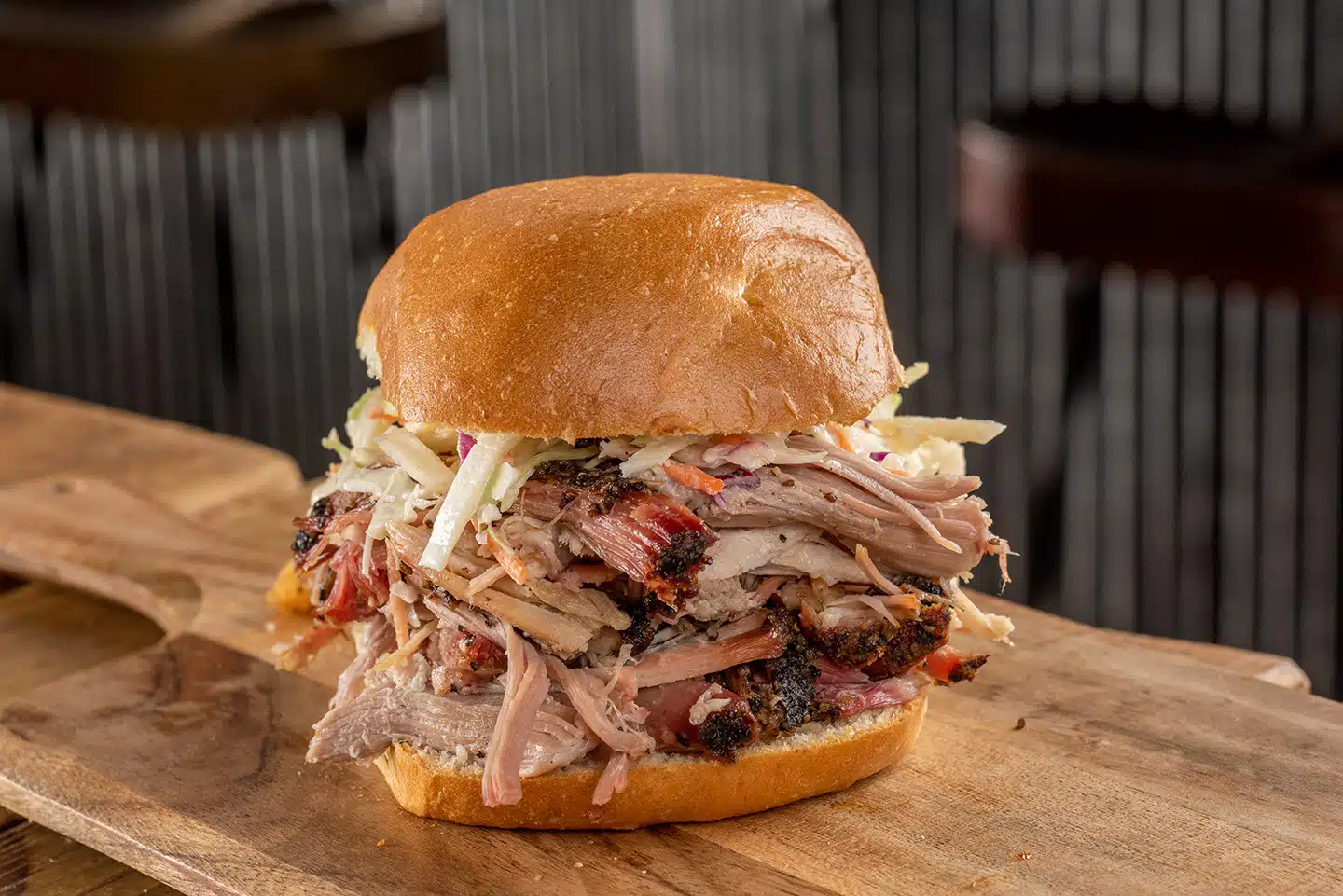
Barbecue offers another clear example. People love to debate whether barbecue is "really" from one state or another, but the stronger historical point is that pit cooking in the South was developed through a mixture of Indigenous, African, and European influences, then refined over generations by Black pitmasters and rural cooks whose names often went unrecorded. The public barbecue restaurant, whether a cinderblock roadside stop or a larger smokehouse, owes a great deal to labor traditions that began in community gatherings, political events, church functions, and plantation-scale cooking.
Fried chicken tells a similar story. Scottish frying traditions are part of the background, but African American cooks expanded and defined the seasoning, texture, and cultural role of the dish in Southern life. What became a restaurant staple was shaped not just by technique but by occasion. Fried chicken traveled well, fed crowds, and suited both festive meals and practical packed lunches. That versatility helped carry it from home kitchens into lunch counters, boarding houses, train dining services, and eventually national chains.
Boarding houses, taverns, and the earliest public Southern cooking
Before the restaurant as we know it became common, much Southern dining away from home happened in taverns, inns, boarding houses, hotels, and market stalls. These places rarely advertised themselves as preserving a regional culinary identity. They served what was available, what travelers expected, and what kitchens could produce in volume with limited equipment.
In port cities such as Charleston, Savannah, New Orleans, Mobile, and Norfolk, cooks worked in environments shaped by trade. Imported spices, coffee, sugar, citrus, and rum interacted with local seafood, rice, and produce. Urban Southern eating was never as isolated as nostalgic storytelling suggests. These were connected places. New Orleans, in particular, developed one of the most layered restaurant cultures in the South, drawing on French, Spanish, African, Caribbean, German, Sicilian, and local influences. Creole and later Cajun restaurants became important models for how Southern food could be codified, named, and sold to the public.
Elsewhere, simpler establishments served working people. Meat-and-three service, though it reached its full expression later, has roots in this practical need to feed laborers affordably and quickly. A protein, a few vegetables, bread, and something sweet if margins allowed, this was not a chef's theory of a balanced plate. It was a system built for throughput, cost control, and satisfaction.
The Civil War, Reconstruction, and a fractured food economy
The Civil War shattered the Southern economy, and food service changed with it. Supply chains collapsed. Farmland was destroyed or disrupted. Wealthy households that had relied on enslaved labor lost the structure that had supported their kitchens, though many formerly enslaved cooks continued to work in domestic service because economic alternatives remained sharply limited. Public eating became more important in some places precisely because private abundance had declined.
Reconstruction brought mobility, rail travel, urban growth, and new patterns of wage labor. Hotels and railroad dining facilities expanded the reach of Southern cooking, but they also standardized it. Travelers wanted recognizable dishes. Operators needed menus that could be repeated with some consistency. That pressure tends to flatten regional nuance, and you can see the beginning of that process here. A biscuit in eastern North Carolina was not exactly the same biscuit as one in north Alabama, but to a hotel menu writer both might simply be called "hot biscuits."
At the same time, African American entrepreneurs opened boarding houses, lunchrooms, catering businesses, and small restaurants, though many faced severe legal and financial barriers. Their contributions are harder to trace in formal archives because so many of these businesses operated with little institutional recognition. Still, they were crucial in carrying Southern food into commercial settings outside white-owned households and hotels.
The birth of the iconic Southern restaurant format
If one format defines the twentieth-century Southern restaurant, it is probably the cafeteria or meat-and-three. This model flourished because it fit the region's economics and social rhythms. It offered speed, familiarity, and variety without requiring a large à la carte kitchen operation. A customer could move down the line and build a meal that resembled supper at home: fried chicken or country fried steak, lima beans or turnip greens, macaroni and cheese, candied yams, cornbread, tea.
The genius of the format was practical. Vegetables that held well in steam tables could be cooked in batches. Braised meats stretched profitably. Desserts like banana pudding, chess pie, peach cobbler, and layer cake brought customers back and made use of existing baking labor. During busy lunch service, the line moved fast. During slower periods, the same menu could serve families, churchgoers, office workers, courthouse employees, and travelers.
This was also the era when "home cooking" became a marketable concept. Restaurants learned that people would pay not just for food, but for the feeling of continuity. White tablecloths were not the only route to respectability. Fluorescent-lit cafeterias with trays and rotating pies could build generations of loyalty if the green beans tasted right and the rolls arrived hot.
For many Southerners, these places were civic institutions as much as businesses. They hosted post-funeral meals, political lunches, after-church crowds, high school team dinners, and everyday weekday lunches. The modern Southern restaurant inherited this social function. It is one reason hospitality in the region still carries unusual weight. Guests are not merely seated and served. They are folded into a ritual of welcome that people often understand as cultural, not simply commercial.
Race, segregation, and the dining room as a political space
Any history of the Southern restaurant must also account for exclusion. For decades, public dining in the South was structured by segregation. Who could enter through the front door, who sat where, who cooked, who served, and who owned were all shaped by racial hierarchy. The lunch counter became one of the most visible battlegrounds of the civil rights movement because restaurants were never just about meals. They were about citizenship, dignity, and public access.
This history matters to the modern Southern restaurant because the dining room still carries memory. Some legacy establishments have faced difficult questions about who was welcomed in the past and how that past is represented now. Others have quietly changed without publicly reckoning with their own histories. There is no single script for doing this well, but diners increasingly notice the difference between sincere acknowledgment and decorative nostalgia.
The labor structure also evolved unevenly. Many Black cooks remained essential to Southern restaurant kitchens even when they were excluded from ownership, recognition, and equitable pay. Over time that imbalance began to shift, but slowly. The current generation of Southern chefs, writers, and restaurateurs has done more to foreground Black culinary authorship than previous generations did, though there is still a long way to go.
Industrialization, highways, and chain culture
The South changed dramatically after World War II. Highways expanded. Suburbs spread. Refrigeration improved. Food distribution became more centralized. With those changes came roadside restaurants, motor lodges, drive-ins, and chain concepts. A Southern restaurant no longer had to serve only a local audience. It could cater to tourists, traveling salesmen, soldiers, and interstate traffic.
This period produced a striking contradiction. On one hand, industrial food systems diluted regional distinctiveness. Packaged mixes, frozen breaded products, commodity chicken, and canned vegetables made many menus more uniform. On the other hand, Southern flavors spread farther than ever. Fried chicken, biscuits, country Southern restaurant ham, barbecue, and sweet tea entered a national commercial vocabulary.
Fast food deserves a place in this story. It is easy to dismiss chains as outside the real Southern tradition, but many grew directly from Southern habits of eating. Biscuits for breakfast, hand-breaded chicken, gravy, coleslaw, iced tea, and fried pies did not land on chain menus by accident. They were abstractions of regional preferences. The downside, of course, was simplification. Recipes were reformulated for scale, labor was deskilled where possible, and ingredients were selected for consistency over depth of flavor.
Anyone who has worked in or around Southern restaurants can tell you that this changed customer expectations too. Once diners get used to year-round tomatoes, boneless chicken breasts, and instant refills of very sweet tea, it becomes harder to explain seasonality or labor-intensive preparation. The best independent Southern restaurants have spent decades negotiating that tension.
The rise of "new Southern" cooking
By the late twentieth century, chefs in cities such as Charleston, Atlanta, Louisville, Nashville, Birmingham, Richmond, and New Orleans began to reframe Southern food for a more self-conscious restaurant audience. Some drew from French technique. Some leaned into farm sourcing. Some revived heirloom ingredients like benne seeds, Sea Island red peas, Carolina Gold rice, and regional apple varieties. Some borrowed from fine dining plating while keeping the flavor memory of family food intact.
This movement had real strengths. It rescued ingredients from obscurity, improved sourcing, and encouraged diners to treat Southern cuisine as worthy of serious attention. It also created space for chefs to talk openly about history, terroir, and regional variation. A bowl of shrimp and grits, once seen in many places as humble fare, could be studied, refined, and presented with care rather than apology.
Still, "new Southern" had its blind spots. In some hands, it polished Southern food so aggressively that the result felt disconnected from the communities that sustained it. Menus sometimes celebrated field peas while ignoring the Black cooks who had preserved the tradition. Expensive reinterpretations occasionally stripped working-class dishes of their context while charging luxury prices for them. This is a familiar pattern in American restaurant culture, and Southern food is not exempt.
The more interesting restaurants avoided that trap by pairing refinement with research and respect. They did not just put pimento cheese in a quenelle and call it progress. They asked whose recipe traditions they were drawing from, what ingredients meant locally, and how service could reflect hospitality without turning regional identity into theater.
Why the modern Southern restaurant looks the way it does
Walk into a contemporary Southern restaurant and you often see several historical layers at once. The menu might pair cornbread with whipped sorghum butter, fried catfish with chowchow, oysters with hot sauce mignonette, braised greens with smoked turkey, and a banana pudding finished with delicate pastry work. That combination is not random. It reflects centuries of borrowing, adaptation, memory, and commerce.
Several features define the modern version.
First, there is usually a strong attachment to narrative. Restaurants now explain where ingredients come from, why a recipe matters, or which grandmother, church supper, smokehouse, or fishing town inspired a dish. Some of that storytelling is sincere, some of it is branding, and often it is a mix of both.
Second, there is a wider understanding that Southern cuisine is regional, not monolithic. The food of the Lowcountry differs from that of the Mississippi Delta. East Texas barbecue traditions are not the same as western Kentucky mutton barbecue. Appalachian bean-and-greens cooking is different from Creole restaurant cooking in New Orleans. Better restaurants make those distinctions clear rather than collapsing everything into a generic comfort-food category.
Third, the dining room itself has changed. Older Southern restaurants often emphasized abundance and predictability. Many current ones emphasize atmosphere, beverage programs, and a balance between tradition and novelty. You are as likely to find natural wine, craft cocktails, and locally roasted coffee as you are a tray line and pie case. Yet the underlying promise remains familiar: generosity, flavor, and a sense that the meal means something beyond fuel.
What gets preserved, what gets lost
A restaurant can preserve a dish, but it can also distort it. That is the central trade-off in turning regional food into a public business. Fried okra cooked to order in a restaurant may be technically better than what most people make at home on a rushed weeknight, but if it arrives with no understanding of where it belongs in the broader meal, something is missing. The same goes for biscuits that are laminated like French pastry, smoked pork presented as luxury tasting-menu bites, or gumbo stripped of the patience that gives it depth.
The reverse can also be true. Some home traditions survive precisely because restaurants keep them visible. Not many urban diners are shelling butter beans or cooking country captain at home on a Tuesday. If restaurants stop making those dishes well, they may disappear from everyday recognition. That is one reason menu choices matter more than they might seem. A plate lunch can carry archival value.
There is also the question of labor. Southern food is often described as comforting, but it is rarely effortless. Good biscuits require touch and repetition. Properly seasoned cast-iron cornbread takes attention. Pit barbecue takes time, fuel, and judgment. Stocks, gravies, pickles, relishes, cakes, and pies all demand labor that many modern business models struggle to support. When a Southern restaurant cuts corners, the losses show up quickly. Greens taste flat. Gravy tastes starchy. Peach cobbler tastes like filling and sugar, not fruit.
The future is being written in old forms
The most compelling Southern restaurants operating now are not trying to freeze the cuisine in one ideal decade. They are treating history as a living resource. Some are led by Black chefs reclaiming dishes that earlier restaurant culture either appropriated or ignored. Some are immigrant-owned places that fit naturally into the Southern story because the South has never been culturally sealed. Vietnamese communities on the Gulf Coast, for example, have had a profound effect on seafood culture in certain areas. Mexican cooks and entrepreneurs have long shaped Southern kitchens, farms, and restaurant labor, and increasingly they shape menus and ownership too.
Climate, agriculture, and economics will influence the next chapter as much as memory does. Rising seafood prices, pressure on small farms, changing pork production, and hotter growing conditions are already affecting what a Southern restaurant can buy and serve. That may sound abstract until a kitchen tries to source local oysters after a storm season, or heritage grains during a poor harvest, or catfish at a price customers will accept.
Yet Southern food has always adapted. It was built from adaptation. The strongest restaurants understand that tradition is not a museum piece. It is a set of choices made under real conditions, with whatever ingredients, people, and tools are available, while trying to honor the flavor logic and social meaning of the cuisine.
That is the real history behind the modern Southern restaurant. It is not just a story about biscuits, bourbon, and brunch. It is a story about land and labor, about memory and marketing, about injustice and creativity, about the movement of people and the stubborn endurance of taste. When a Southern dining room gets it right, you can feel all of that in the meal. Not as a lecture, and not as nostalgia alone, but as living craft.
Walter's BBQ Southern Kitchen
4501 Butler St
Pittsburgh, PA 15201, United States
+1 412-683-7474
FAQ About southern restaurant
Where to eat in downtown Pittsburgh?
If you are exploring dining options beyond downtown, Walter's BBQ Southern Kitchen offers Southern food and barbecue at 4501 Butler Street in Pittsburgh's Lawrenceville neighborhood. It is outside downtown, so allow travel time when planning your visit.
What is a must eat in Pittsburgh?
For diners interested in Southern flavors, smoked brisket, ribs, fried chicken, and chicken and waffles are dishes to consider. Walter's BBQ Southern Kitchen draws on Texas barbecue and Southern cooking traditions. Check the current menu for the dishes available during your visit.
What are some of Pittsburgh's unique restaurants?
Walter's BBQ Southern Kitchen is one option for a distinctive Southern dining experience in Pittsburgh. Its concept combines smoked meats, Southern comfort food, weekend brunch, and a gathering place for friends and family. The restaurant is located on Butler Street in Lawrenceville.
Ends · ERICKEZUF367