The Soul of Southern Cooking in Every Southern Restaurant
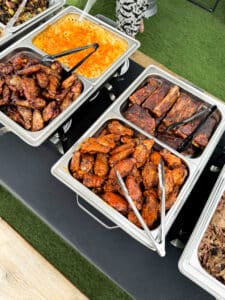
Walk into a good Southern restaurant and you notice it before the first plate hits the table. It is there in the smell of onions softening in a pan, in the low hiss of chicken meeting hot oil, in the sweet trace of baked cornbread drifting out from the kitchen. It is there in the way the room sounds, too. Southern restaurants rarely feel rushed, even when the line is deep and every seat is taken. The best ones know that hospitality is not a performance. It is part of the meal.
People often reduce Southern cooking to a handful of familiar dishes: fried chicken, biscuits, barbecue, shrimp and grits. Those dishes matter, but they are only the visible edge of something much deeper. Southern food carries memory, migration, hardship, celebration, regional pride, and a very practical understanding of how to make ingredients stretch without ever feeling cheap. It has roots in African, Indigenous, European, and Caribbean traditions, shaped over generations by cooks who knew how to build flavor with patience and nerve.
That is the soul people are chasing when they choose a Southern restaurant. Not novelty for its own sake. Not a museum piece. They want food that feels grounded, generous, and honest. They want a place where the cooking has enough confidence to be simple when simplicity is the right call, and enough judgment to handle complexity when a dish demands it.
More than comfort food
The phrase "comfort food" gets used so loosely that it can flatten an entire cuisine. Yes, Southern food comforts. A bowl of chicken and dumplings on a cold day does exactly that. So does a plate of smothered pork chops with rice, or collard greens cooked low and slow until their broth turns silky and mineral-rich. But comfort is the effect, not the definition.
A serious Southern restaurant works from a set of values that goes well beyond familiarity. Seasoning has to be deliberate. Texture matters. A crust must crackle, not sag. A biscuit should pull apart in tender layers, not crumble like sawdust. Greens need acid and depth, not just salt. Macaroni and cheese cannot hide behind extra cheddar if the sauce is grainy or split. The food often looks plain on the page, which means there is nowhere to hide.
That is one reason Southern cooking can be harder than it appears. Dishes associated with home kitchens are unforgiving in a commercial setting. Every batch of grits behaves a little differently. Fry stations drift out of calibration during a rush. Humidity changes biscuit dough. Beans that were perfect at two in the afternoon can go muddy by seven if the kitchen loses focus. At a strong Southern restaurant, the cooks know all of this and make the necessary adjustments without drama.
The regions speak in different accents
There is no single Southern menu. Anyone who has spent time eating across the region knows how quickly the landscape changes once you move a few hundred miles. Lowcountry cooking in South Carolina does not taste like Cajun food in Louisiana. Tennessee meat-and-three traditions are not interchangeable with coastal North Carolina seafood houses. A restaurant that claims to serve "Southern" food without any sense of place can end up sounding generic.
In the Carolinas, rice traditions run deep, especially around Charleston and the coast, where dishes like red rice, Hoppin' John, and seafood stews tell a story tied to marshes, tides, and the labor of enslaved Africans who brought critical agricultural knowledge with them. In Louisiana, the language of roux, spice, smoke, and stock creates its own grammar. In Appalachia, preserving, pickling, beans, greens, cornmeal, and country ham shape a cuisine with remarkable resourcefulness. In Texas, Southern overlaps with ranch culture, Czech and German baking traditions, and barbecue that can become almost theological in its local specificity.
A thoughtful Southern restaurant picks a lane, even if it borrows broadly. That does not mean a chef must be rigid. It means the food should show self-awareness. A menu can feature pimento cheese, catfish, and banana pudding together, but the kitchen needs to know why those dishes belong in the same room.
The invisible work behind the plate
One of the clearest signs that a Southern restaurant takes itself seriously is how much work happens before service. Southern cooking rewards advance preparation. Stocks simmer. Pepper vinegar matures. Chow-chow develops over time. Cake layers cool. Greens are washed again and again because grit has a talent for surviving the first rinse. Pie dough rests. Beans soak. Slaws sharpen in the walk-in.
That preparation creates the illusion of ease that guests tend to remember as warmth. The plate arrives looking generous rather than fussy, almost casual, as if it simply came together on its own. It did not. Behind every spoonful of gravy that tastes complete, there was someone who understood how long flour should cook in fat before stock goes in. Behind every braised pot roast that yields under a fork, there was a cook willing to give it another half hour instead of pushing it out too early.
The old joke in restaurants is that simplicity is expensive. In a Southern restaurant, that is often true in labor more than in ingredients. Red beans and rice can be humble, but humble is not the same as easy. Banana pudding can seem straightforward, but getting the balance right between vanilla, cream, cookie softness, and sweetness is not an accident. These dishes ask for restraint, and restraint is one of the hardest things to teach in a kitchen.
Hospitality is part of the recipe
The soul of Southern cooking is not only on the stove. It is also in the room. Good service in a Southern restaurant rarely feels stiff. It has rhythm and confidence, but it leaves space for personality. A server who knows when to top off sweet tea, when to ask whether you want hot sauce, and when to leave a table alone for a few minutes is doing more than managing timing. They are protecting the mood.
That mood matters because Southern food is deeply social. It is built for passing plates, for second helpings, for talking while something cools just enough to eat. Even in more polished dining rooms, the spirit of abundance should remain. Not excess for its own sake, but a sense that the restaurant wants you fed and cared for.
I have seen kitchens spend months refining a menu and still miss the mark because the front of house treated guests with cool efficiency instead of warmth. I have also seen modest dining rooms with wobbly chairs and no design budget create memorable meals because the staff understood the assignment. They greeted regulars by name, steered first-time visitors toward the right sides, and knew that a basket of warm biscuits landing at the right moment could settle an entire table.
Signature dishes that reveal the kitchen
Some foods tell you almost everything you need to know about a Southern restaurant. They are not always the most expensive items. Often they are the standards that too many places take for granted.
Here are five dishes that tend to expose the strengths and weaknesses of the kitchen:
- Fried chicken tests timing, seasoning, oil management, and nerve. Pale crust or raw flour notes are immediate warnings.
- Biscuits reveal skill with dough and an understanding of texture. They should be light without tasting empty.
- Collard greens show whether the kitchen values depth. Great greens taste of greens first, pot liquor second, and salt last.
- Shrimp and grits exposes balance. The grits should be cooked through and creamy, the shrimp properly timed, the sauce integrated rather than dumped on top.
- Banana pudding is a measure of restraint. It should taste of vanilla, dairy, fruit, and memory, not only sugar.
A polished kitchen can make all five sing. A sloppy one usually gets exposed by at least two of them. That is why regular diners often Southern restaurant order these classics first. They are not playing it safe. They are gathering evidence.
Tradition and change can sit at the same table
There is a false argument that surfaces every few years around Southern food. One side insists that tradition must be preserved exactly as remembered. The other treats innovation as proof of seriousness. Both positions miss the point.
Southern cooking has always evolved. Tomatoes, peppers, peanuts, rice cultivation, milling methods, preservation techniques, cast-iron habits, and smoke traditions all changed across time. Restaurants that respect Southern food do not freeze it. They understand the bones of a dish before changing the muscle around it.
A chef might use benne seeds in a new pastry, cure local fish with cane syrup and salt, or fold roasted heirloom corn into spoonbread. None of that is a betrayal if the result still tastes anchored to place and principle. Problems arise when the changes are decorative rather than meaningful. A deviled egg topped with a tower of unrelated garnishes is not automatically more interesting than a classic one done well. Fancy plating cannot replace flavor.
The strongest modern Southern restaurants know when to update and when to leave a dish alone. Sometimes the smartest move is to source better produce and do less to it. A field pea cooked gently with aromatics and finished with a little pork stock can say more than a plate stacked with ten components that never quite become dinner.
Ingredients carry the story
When Southern food is at its best, ingredients are treated with respect but not reverence. That distinction matters. Reverence can make cooks timid. Respect makes them attentive.
Seasonality plays a larger role than outsiders sometimes realize. Summer tomatoes, butter beans, okra, peaches, watermelon, and corn push a menu in one direction. Colder months invite braises, sweet potatoes, greens, cured meats, and dried beans. Gulf shrimp are not interchangeable with imported frozen shrimp just because the dish name stays the same. Stone-ground grits have a different texture and corn aroma than the quick versions many diners grew up with. Cane syrup is not simply sugar in another form. Country ham is not deli ham with better branding.
A Southern restaurant that cares about quality tends to reveal itself in these choices. The produce may come from nearby farms, or it may not if geography and economics make that unrealistic. Local sourcing can be valuable, but it is not magic. What matters more is whether the kitchen buys intelligently, stores carefully, and cooks with enough discipline to let those ingredients register on the palate.
One chef I knew used to say that Southern food is "ingredient honest." If the tomatoes are weak, the plate will expose them. If the butter is good, the biscuit will broadcast it. That honesty can be humbling. It can also be thrilling.
The role of smoke, fat, acid, and time
Southern cooking often relies on a few structural elements that experienced cooks learn to balance instinctively. Smoke appears in barbecue, cured meats, smoked sausage, and even in the background notes of greens or beans. Fat gives tenderness, rounds out spice, and carries aroma, whether it comes from butter, lard, bacon drippings, or chicken skin. Acid keeps richness from collapsing under its own weight. Time, perhaps most important of all, allows ingredients to become more than the sum of their parts.
These are not abstract ideas. They show up in the details. Potato salad without enough acid can feel dull no matter how much mustard you add later. Black-eyed peas rushed on the stove stay separate and stubborn instead of turning creamy. Barbecue sauce that leans sweet without smoke or tang becomes sticky noise. A pan of cornbread made with insufficient preheating misses that prized edge where crispness meets crumb.
A well-run Southern restaurant builds these balances into every station. The fry cook has salt ready the moment food leaves the oil. The garde-manger knows a pickle is not a garnish but a counterpoint. The pitmaster understands that smoke should deepen meat, not dominate it. The pastry cook keeps sweetness in check so dessert still tastes like food.
Why side dishes matter so much
In many cuisines, sides support the star. In a Southern restaurant, they can be the star or at least equal billing. Ask regulars what they remember from a favorite place and you will often hear about turnip greens, corn pudding, succotash, lima beans, stewed okra and tomatoes, or baked macaroni before the main protein even comes up.
This is partly cultural and partly practical. Southern meals were shaped by gardens, smokehouses, and economies where meat was often precious. Vegetables were not decorative. They were central. So were starches with character. Rice carried gravies and absorbed juices. Grits could be creamy, coarse, buttery, cheesy, or plain and still carry enormous personality. Cornbread had regional and household variations that people defended with real passion.
For restaurateurs, side dishes are also where care becomes visible. It is relatively easy to buy a decent cut of pork and cook it competently. It is harder to execute six or eight sides every day, in volume, without letting them become repetitive or tired. Guests notice. They may forgive an average chicken breast if the field peas are exceptional and the slaw has snap. They almost never forgive lazy sides.
What diners are really looking for
People do not always have the vocabulary to explain why one Southern restaurant feels alive and another feels staged. They may simply say that one feels "real." Usually they are responding to a cluster of cues.
A place feels real when the food has specific flavor rather than a generic richness. It feels real when the menu reflects a point of view instead of a search-engine collection of Southern greatest hits. It feels real when the staff can explain whether the greens include smoked turkey or pork, whether the cornbread runs sweet or savory, whether the pie was baked that morning. It feels real when recipes have continuity, when regulars know the chicken tastes the same as last month, only better because peaches are now in season.
There is also an emotional expectation at work. People come to a Southern restaurant wanting to feel welcomed, but not manipulated. They want generosity without kitsch. That means no forced nostalgia, no caricature of regional identity, no cartoon version of hospitality. Nothing cheapens a meal faster than a restaurant that treats Southern culture as a theme rather than a living tradition.
Common mistakes that drain the soul out of the food
Some failures are technical. Others are conceptual. Both matter.
The technical mistakes are familiar: underseasoning, oversweetening, frying at the wrong temperature, relying on paprika for color instead of flavor, overcooking seafood, serving grainy grits, thickening sauces into paste. These can all be fixed with training and discipline.
The conceptual mistakes are harder because they reflect misunderstanding. A restaurant loses credibility when every dish is made heavier than it needs to be, as if Southern food must always overwhelm. It loses credibility when spice becomes shorthand for character. It loses credibility when portions are huge but flavor is thin. It loses credibility when the menu erases Black culinary influence while borrowing freely from its techniques and signature dishes.
The strongest operators understand that soul is not the same as sentimentality. It comes from craft, continuity, and respect.
What keeps the tradition alive
The future of Southern cooking will not be secured by nostalgia alone. It depends on restaurants willing to train cooks properly, pay enough to retain them, and preserve techniques that do not fit neatly into shortcut culture. Biscuit makers, pit cooks, pastry hands, prep cooks who know how to clean greens fast and well, sauciers who can make gravy without a recipe card, all of them carry knowledge that disappears faster than people think.
It also depends on diners who reward substance. When guests support restaurants that make stock in-house, cook beans from dry, source quality cornmeal, or turn trimmings into chowchow instead of waste, they support a way of cooking that values both economy and excellence. That has always been one of the great strengths of Southern food. It wastes little, remembers much, and transforms ordinary ingredients into something lasting.
If you want to judge whether a Southern restaurant truly has soul, pay attention to a few simple signs:
- The room feels welcoming without trying too hard.
- The sides are as carefully made as the entrées.
- The classics show discipline, not shortcuts.
- The menu reflects a real point of view.
- The meal leaves you satisfied, not just full.
That last distinction matters. Plenty of places can make you full. Soul asks for more. It asks for memory, flavor, and care in equal measure. It asks a restaurant to understand where its food comes from and what it means to the people who eat it.
A memorable Southern restaurant never serves only dishes. It serves inheritance, adaptation, and a particular kind of grace. You taste it in the pepper vinegar brightening the greens, in the biscuit steam rising when you split it open, in the crust on the fried chicken that stays crisp long enough for one more bite. You feel it in the pacing of the room and the steadiness of the kitchen. That is the soul of Southern cooking, and when it is done right, it reaches the table long before anyone asks for the check.
Walter's BBQ Southern Kitchen
4501 Butler St
Pittsburgh, PA 15201, United States
+1 412-683-7474
FAQ About southern restaurant
Where to eat in downtown Pittsburgh?
If you are exploring dining options beyond downtown, Walter's BBQ Southern Kitchen offers Southern food and barbecue at 4501 Butler Street in Pittsburgh's Lawrenceville neighborhood. It is outside downtown, so allow travel time when planning your visit.
What is a must eat in Pittsburgh?
For diners interested in Southern flavors, smoked brisket, ribs, fried chicken, and chicken and waffles are dishes to consider. Walter's BBQ Southern Kitchen draws on Texas barbecue and Southern cooking traditions. Check the current menu for the dishes available during your visit.
What are some of Pittsburgh's unique restaurants?
Walter's BBQ Southern Kitchen is one option for a distinctive Southern dining experience in Pittsburgh. Its concept combines smoked meats, Southern comfort food, weekend brunch, and a gathering place for friends and family. The restaurant is located on Butler Street in Lawrenceville.
Ends · ERICKEZUF367